Is Ai Really That Scary?
Every Generation Is Terrified of the Next Big Thing
Why Is AI So Scary? (Hint: It’s Not Just You)
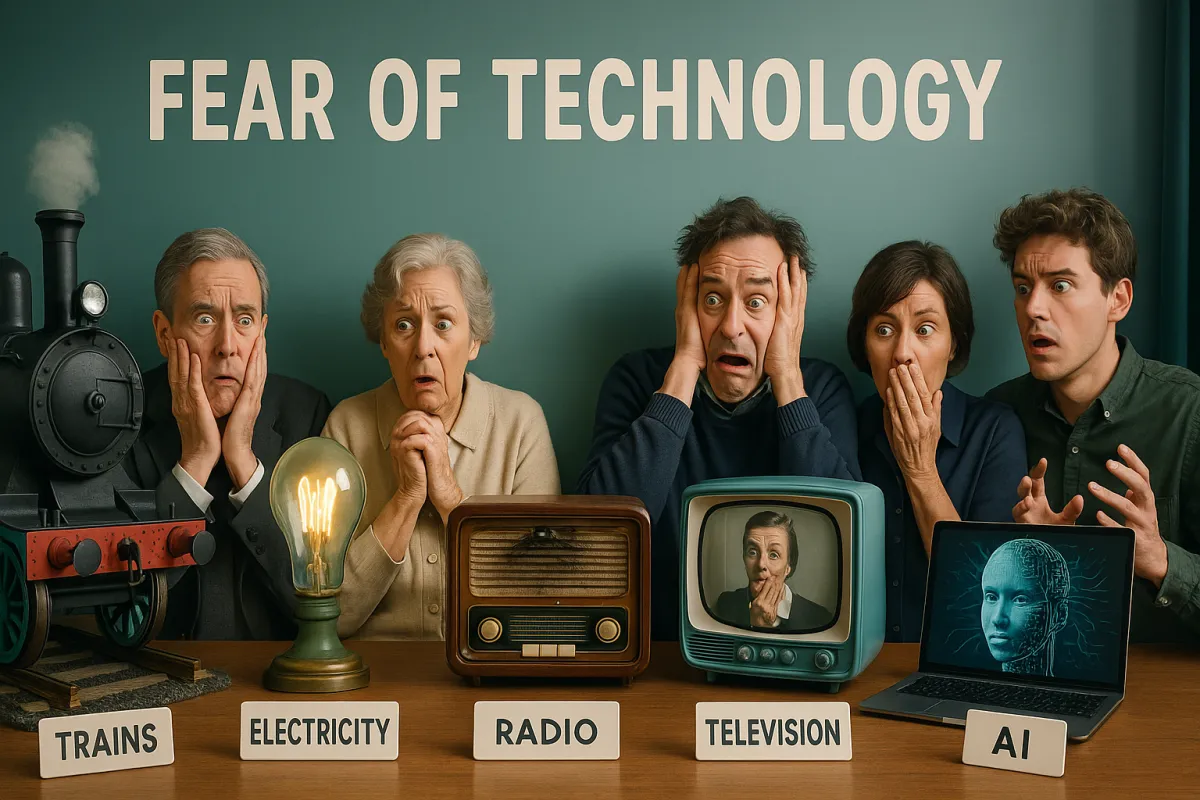
If you think artificial intelligence is the end of the world, congratulations—you’re in very good (and very old) company. Every generation looks at the latest breakthrough and thinks, “Well, this is it. This is how civilization ends.” But history’s most frightening new ideas? They’re now the backbone of daily life—and the source of some truly hilarious overreactions.
Let’s take a wildly entertaining ride through the panic, the predictions, and the payoff of world-changing innovations. Spoiler: The future is always terrifying—until it’s not.
The 1800s: Trains Were the End of Civilization (and Your Face)

When the steam locomotive first thundered onto the scene, people weren’t just skeptical. They were convinced trains would warp your body and melt your mind.
- Doctors warned that “traveling at 30 miles per hour could cause organs to shift within the body.”
- Newspapers shrieked that passengers would suffocate in tunnels.
- Scientists solemnly declared the human face might peel off at high speeds.
Fast-forward to today: Delays on your morning commute are more terrifying than the train itself. But back then? The new technology was a one-way ticket to doom.

The 1880s: Electricity = Instant Death (and Moral Decay)
When electricity arrived, so did the fear—and the drama.
- People believed electric lights could blind you or cause “nervous disorders.”
- Serious thinkers argued that electric wires would “drain the life force from the air.”
- One U.S. town banned electricity from being installed in homes, just in case.
Now, try living a single day without charging your phone. That “terrifying” innovation? It powers everything from your coffee maker to your company’s bottom line.

The 1920s: Radio Will Ruin Your Brain (And Your Social Life)
The dawn of radio brought music and news into living rooms—and unleashed a new wave of panic.
- Critics warned radio would “destroy family conversation.”
- Doctors claimed listening too long would “overstimulate the brain and cause insomnia.”
- One prominent group insisted the nation’s youth would become “lazy and isolated” if they tuned in.
Sound familiar? Today, we call it “podcasting.” And nobody’s giving up their playlists or news briefs—or blaming their insomnia on the AM dial.

The 1950s: Television—The Idiot Box That Would End Society
Television’s arrival turned up the volume (and the panic):
- Teachers warned TV would “rot children’s brains.”
- Parents feared families would never talk again.
- Newspapers predicted a collapse in book reading, culture, and intelligence.
But instead of erasing society, television launched new industries, connected the world, and yes—even educated millions. (Jeopardy, anyone?)
Present Day: AI—The New Kid on the Panic Block
Now, it’s AI’s turn in the hot seat. People fear job losses, mind control, and the rise of robot overlords. Sound outlandish? So did face-melting train rides.
Here’s the pattern:
- Every innovation feels like a threat.
- Wild predictions (usually wrong) abound.
- Society adapts. People benefit. The next “scary” thing arrives.
The Punchline: Progress Is Inevitable. Panic Is Optional.
Every major leap—trains, electricity, radio, TV—was met with dread, disbelief, and some truly funny warnings. But each one delivered massive benefits, created new jobs, and made life better.
AI is just the latest chapter. Will it bring challenges? Absolutely. But history says our biggest fears are rarely the real story. The real danger? Missing the opportunity because fear won the day.
Final Thought: Let’s Learn, Not Lament
The next time you hear, “This new tech will destroy us all!”—just remember: it’s been said before. And the world kept turning, innovating, and thriving.
Curious how real innovation can turn chaos into growth? Check us out at www.aivance.co
---
About Aivance Agency
Aivance connects what matters—people, systems, and technology—so your business thrives, no matter what the future brings. We don’t fear the next big thing. We make it work for you.


